System Logic
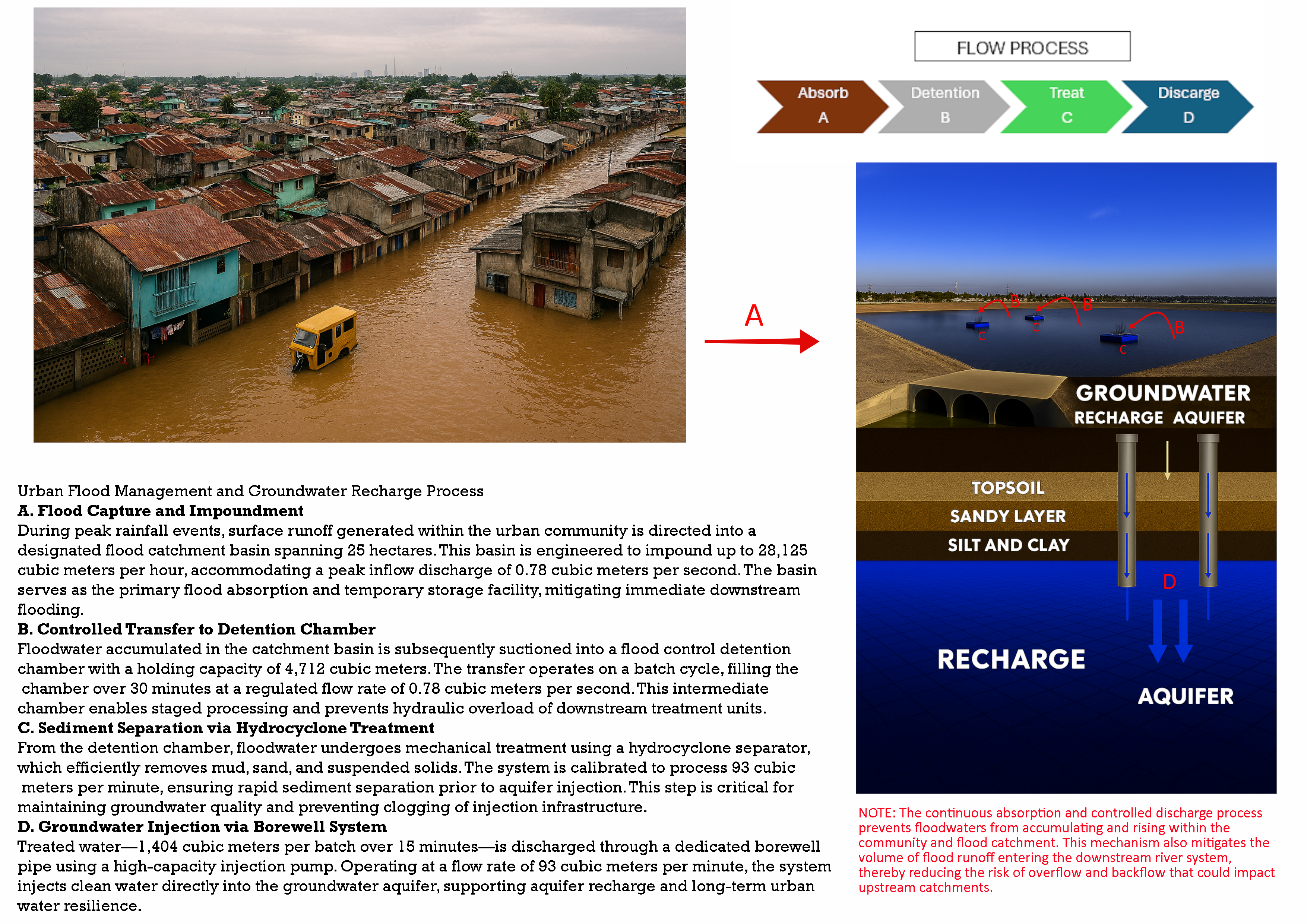
Floodwaters from urban catchment zones are diverted into engineered basins designed to detain runoff volumes based on
peak discharge rates (in cubic meters per second). These basins serve as dynamic buffers and recharge nodes, mitigating urban
flooding while enhancing subsurface water storage.
Operational Phases
1. Absorb and Detain (30 minutes)
-Urban floodwater is routed into the catchment basin during peak rainfall.
-The basin temporarily stores runoff, preventing surge into river systems.
-Hydraulic pressure is stabilized, and water level rise is prevented.
2. Treat and Recharge–Discharge (15 minutes)
-Stored water undergoes basic treatment (e.g., sedimentation, filtration, clarifier tank).
-A portion of the treated water is simultaneously injected into the groundwater aquifer via recharge wells or infiltration beds.
-Remaining volume is discharged in a controlled manner into river systems, timed to avoid peak flow and prevent backflow.
Technical Outcomes
-Flood Level Stabilization: Prevents urban water level rise during peak rainfall.
-Runoff Volume Reduction: Minimizes river surge and backflow risk.
-Aquifer Recharge: Enhances groundwater sustainability and urban water resilience.
-Water Quality Management: Enables basic treatment before recharge/discharge.
-Integrated Urban Resilience: Combines flood control, water conservation, and environmental protection.
Aquifer Storage and Recovery (ASR)
Aquifer Storage and Recovery (ASR) is an innovative water management process that enhances groundwater sustainability by capturing excess flood runoff and storing it in underground aquifers. This stored water can later be recovered and utilized for various purposes, especially during dry seasons or periods of water scarcity.
ASR Process Overview
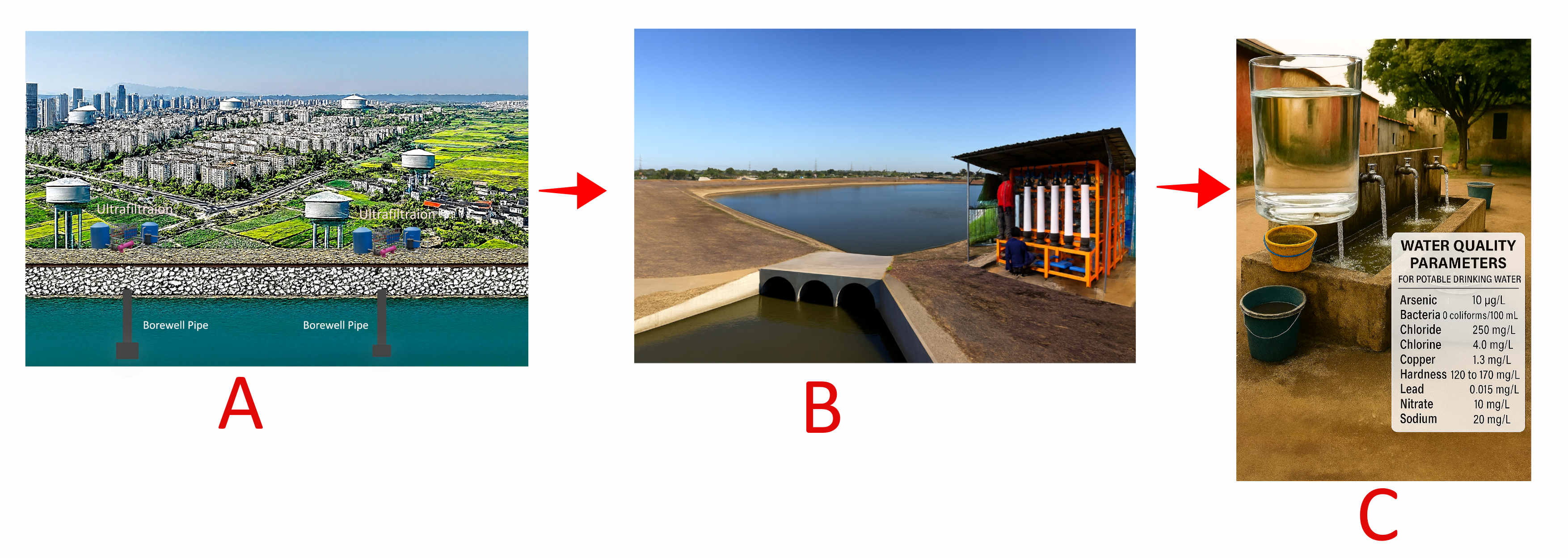
A) Recharge and Recovery
- During periods of heavy rainfall or flood runoff, surplus water is directed into the aquifer through infiltration basins or injection wells.
- The deposited water is stored naturally underground and later recovered, typically from upstream recovery wells, when needed for supply.
B) Purification
- The recovered groundwater is processed through an Ultrafiltration (UF) System.
- This advanced purification step ensures the water meets established quality standards for safe use in domestic, municipal, and agricultural applications.
C) Storage and Distribution
- Once treated, the purified water is stored in elevated overhead tanks.
- From there, it is distributed to urban communities for household use and also allocated for agricultural irrigation, supporting both public health and food security.
Key Benefits of ASR (Aquifer Storage and Recovery)
1. Flood Mitigation
- Captures excess flood runoff and diverts it into underground aquifers.
- Reduces surface water accumulation, lowering the risk of urban flooding.
2. Groundwater Recharge
-Replenishes depleted aquifers, helping restore natural groundwater levels.
-Enhances long-term water security, especially during dry seasons.
3. Water Quality Improvement
- Recovered water undergoes ultrafiltration, ensuring it meets health and safety standards.
- Reduces reliance on contaminated surface water sources.
4. Urban Water Supply
- Treated water is stored in overhead tanks and distributed to communities.
- Supports domestic use, firefighting reserves, and emergency water access.
5. Agricultural Support
- Provides a reliable source of irrigation water, especially during droughts.
- Enhances crop resilience and food production in peri-urban and rural zones.
6. Climate Adaptation & Sustainability
- Promotes nature-based solutions for water management.
- Aligns with circular water use principles, turning flood risks into water assets.
7. Cost-Effective Infrastructure
- Reduces the need for large-scale surface reservoirs and complex conveyance systems.
- Leverages natural subsurface storage, minimizing land acquisition and construction costs.